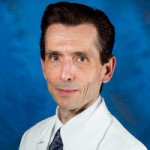
Summary

During my professional and academic career, I have focused on clinical and collaborative studies in the fields of lung transplantation and pulmonary arterial hypertension [PAH]. Unifying these two fields has been rewarding since many patients with refractory PAH will ultimately require bilateral lung transplantation. The clinical successes of our UCLA Lung Transplant Program have been realized by our own center's studies which demonstrated, firstly, that a modified leukocyte-depleted and nutrient enriched allograft reperfusion strategy could ameliorate or prevent 'reperfusion lung injury' [Ardehali A, et al. Modified reperfusion and ischemia-reperfusion injury in human lung transplantation. Thorac Cardiovasc Surg 2003.]. Secondly, that utilizing this strategy, liberalization of the traditional arbitrarily strict 'donor lung criteria' permitted maintenance of outstanding clinical outcomes with benefit of increased donor availability and shortened 'waiting times' for transplantation [Whiting D, et al. Liberalization of donor criteria in lung transplantation. Am Surg 2003]. Our transplant program presently performs approximately 50-60 cases per annum and ranks UCLA Medical Center among the top programs in the nation. Since its inception in 1990 through July 1, 2006; our program has performed 313 lung and heart-lung transplant procedures on a spectrum of cardiopulmonary maladies such as interstitial pulmonary fibrosis, chronic obstructive pulmonary disease, cystic fibrosis, pulmonary arterial hypertension, sarcoidosis and collagen vascular diseases. Our program is among only just a few in the nation, who routinely evaluate and transplant the complex patients afflicted with scleroderma and other collagen vascular diseases [Saggar R, et al. American College of Rheumatology, 2006.]. Our median waiting time for transplantation is 4.6 months which compares quite favorably to 19.9 months for our UNOS Region 5 and 31 months for the national median waiting time. This foreshortened waiting time has resulted in a reduction in our mortality rate while awaiting transplantation - 5.4% at 18 months for our center as compared to a national mortality of 17.5% for 'actively UNOS listed' transplant candidates [Scientific Registry of Transplant Recipients, SRTR, 2006]. Our center's lung transplant recipient survival statistics for the most recent analysis of the interval 7/1/02-12/31/04 (N=78 cases) for 1-month, 1-year, 3-year were 94%, 88%, 78% as contrasted to national rates of 95%, 84% and 64% while the 3-year survival rate was statistically higher for our center (p<;.05). With the clinical availability of the pulmonary vasodilator, inhaled nitric oxide [iNO], our studies further demonstrated that the prophylactic use of iNO could not prevent acute lung injury but significantly increased the total cost of transplantation [Ardehali A, et al. A prospective trial of inhaled nitric oxide in clinical lung transplantation. Transplantation 2001]. This study resulted in an evidence-based modification of our clinical pathways such that iNO is currently only utilized for established reperfusion acute lung injury after transplantation. Collaborative studies with the basic sciences have also been promoted with our lung transplant program. As coordinated John Belperio, M.D, bronchoalveolar lavage fluid [BALF] obtained on protocol routinely after clinical lung transplantation has been interrogated for sundry mediators of airway inflammation and remodeling to thereby advance our understanding of the immunology of both acute and chronic allograft rejection. To date these studies have focused on C-C chemokines (e.g. MCP-1/CCR2, RANTES), interleukin-1 receptor antagonist, interleukin-13 and the C-X-CR3 related chemokines as putatively contributing to allograft dysfunction. Further, collaboration with Tomas Ganz, M.D., Ph.D. and Alexander Cole, Ph.D. in the Will Rogers Institute for Pulmonary Research has highlighted a novel and potential role for the innate immune system (e.g. Beta-2-defensins) in pathogenesis of chronic lung allograft rejection [Ross DJ,
Read More Read less

Quick Facts

  • accepting new patients
  • 5
  • 43 years of experience
  • 8 insurance plans accepted
  • speaks Spanish, English
  • Cedars Sinai Medical Center
  • 4 written reviews
  • 2 specialties
  • 10 areas of expertise
  • 2 board certifications
  • 1 hospital affiliation
  • 2 office locations
  • Male

Office Locations

Dr. David Joseph Ross has 2 locations

Westwood Pulmonary And Critical Care Community Practice Group

200 Medical Plaza Steste 365bLos Angeles, CA 90095
Mon8:00 am - 5:00 pm
Tue8:00 am - 5:00 pm
Wed8:00 am - 5:00 pm
Thu8:00 am - 5:00 pm
Fri8:00 am - 5:00 pm
SatClosed
SunClosed

Compare with Similar Doctors

Dr. David Joseph Ross, MD
Dr. Rana Fattahi, MD
Dr. Marc Edward Arnush, MD
Dr. Fernando Alfonso Dominguez, MD
Dr. David Joseph Ross, MDDr. Rana Fattahi, MDDr. Marc Edward Arnush, MDDr. Fernando Alfonso Dominguez, MD
PulmonologyDiagnostic RadiologyPreventative MedicineInfectious Disease
Accepts New Patients Accepts New Patients Accepts New Patients
43 Years of Experience 20 Years of Experience 27 Years of Experience 14 Years of Experience
No Virtual Visit Option No Virtual Visit Option No Virtual Visit Option No Virtual Visit Option
Speaks Spanish, English Speaks English Speaks English, Spanish Speaks English
Los Angeles , CANorthridge , CACompton , CASan Diego , CA
Med School: Keck School Of Medicine Of The University Of Southern California Med School: Tehran University Of Medical Sciences Med School: Saint Louis University School Of Medicine Med School: Univ Autonoma De Baja California Tijuana Fac De Med Y Psicologia
Current Profile
View Profile View Profile View Profile

Insurance Plans Accepted by Dr. David Joseph Ross

  • Accepts Medicaid
  • BLUE CROSS of CALIFORNIA
  • Blue Shield of California
  • Cigna
  • Health Net - HMO
  • Humana - Medicare (Advantage HMO)
  • SCAN Health Plan
  • SCAN Health Plan - HMO
  • UnitedHealthcare - HMO

Medical Specialties

Dr. David Joseph Ross has the following 2 specialties

Specialty Expertise

Dr. David Joseph Ross has the following 10 areas of expertise

  • Angiographic Visualization
  • Asthma
  • Chest Infection
  • Chronic Obstructive Pulmonary Disease (COPD)
  • Cystic Fibrosis
  • Emphysema
  • Internal Medicine
  • Pneumonia
  • Pulmonary Hypertension
  • Tuberculosis (TB)

Certifications, License, & Education

43 Years Experience

MEDICAL LICENSE

Medical Doctor, California, 2027, Active

EDUCATION & TRAINING

Residency

Cedars Sinai Medical Center

Medical School

Keck School Of Medicine Of The University Of Southern CaliforniaGraduated in 1983

Similar doctors

Frequently Asked Questions

Where is Dr. David Ross's office located?
Dr. David Ross's office is located at 200 Medical Plaza Steste 365b, Los Angeles, CA, 90095.
Which hospitals is Dr. David Ross affiliated with?
Dr. David Ross is affiliated with Ucla Santa Monica Medical Center.
Does Dr. David Ross accept my insurance?
You can see the insurance plans that Dr. David Ross accepts on their Vitals profile.
Does Dr. David Ross accept virtual/telehealth appointments?
Dr. David Ross has not indicated that they accept virtual/teleheatlh appointments. Contact their office through their Vitals profile to check for availability.
How can I make an appointment with Dr. David Ross?
You can find contact information for Dr. David Ross here on Vitals.

Ensuring Data Transparency and Trust: A Guide to Vitals Doctor Listings and Reviews

Our provider data is gathered directly from physicians and publicly available databases. Providers who verify their profiles gain the ability to update information, offering additional details about their specialties,education, treated conditions, performed procedures, and accepted insurances.

Reviews on Vitals are submitted by users only. Recognizing the valuable insights these reviews offer into a doctor's reputation, we maintain internal policies and protocols to ensure the quality and accuracy of all reviews. Importantly, providers cannot delete or alter reviews independently. Reviews can only be deleted or changed following an internal assessment by our customer service team.

Your feedback is highly valued and we encourage you to contact our support team should you encounter any issues.