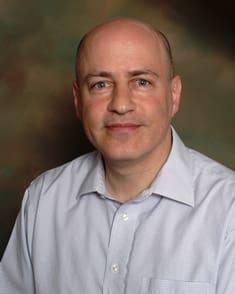
I left a review on another site a year after seeing Dr. Squire. I waited to assure it was as clear and professional as possible. I also left it under a pseudonym. We gave Dr. Squire more than enough time to rectify his errors in my medical notes, and it's unfortunate I must do this on a public site. However, I would be remiss if I didn't inform other potential patients suffering with DIMDs.
Dr. Trevor Squire was the third neurologist I consulted in a 12-month period in 2017, when medications gave me a cluster of drug-induced neurological movement disorders. The first neurologist was in the ER, the second, a specialist in another city.
I had to wait 9 months for an appointment with Squire. It was technically a "second opinion" appointment; not because my appointment with the other neurologist wasn't solid or I felt she didn't do a thorough, good job, but because I hoped to get another "set of eyes" on one particularly distressing and debilitating condition: acute, tardive… akathisia. In fact, this is why we went to see neurologists at the behest of two other doctors who were not neurologists.
Dr. Squire's assessment of me concluded with him completely deferring to the first neurologist in everything she'd written in her notes: confirming I indeed had tardive akathisia and dystonia. However, the other neurologist left out what she told us verbally: my gait disturbance was also an indication of tardive dyskinesia, another DIMD.
Dr. Trevor Squire was in no position to give a medical opinion, nor mental health assessment, based on his clinical conduct and his own admission in my clinical notes. Yet he proceeded to do both.
In my chart, despite his profession that he was not qualified to make such an assessment, he obsessively reiterated that he believed I needed to be evaluated by a mental health professional. He repeated the sentiment four times in his clinical notes.
Dr. Squire knew I’d not only been in therapy for a long time, I was in therapy at the time of my visit with him. In fact, I am still seeing a counselor, mostly to help me cope with the life-altering conditions that have wreaked havoc on not only me, my health, my career, but my entire family.
He led with the diagnosis of "Conversion Disorder." This, after doing nothing to confirm, nor rule it out. We have challenged Squire’s diagnosis officially in my chart based on the very criteria used by most, if not all physicians when making that diagnosis: criteria and burdens of proof Dr. Squire did not come close to meeting in our appointment.
He did no neurological tests to either confirm, nor rule out "Conversion Disorder," the outdated term for FNS. The man didn't touch me, save to shake my hand. My husband and I found attitude both arrogant and dismissive.
His ignorance of the extreme suicidality that comes with drug-induced akathisia was astonishing. Someone without my resources and knowledge who goes to see him could very well walk out of there as I did, only they might not know how misinformed he is. Again, I would be remiss in my duty as a human being to not make public his attitude toward DIMDs as well as mental illness, and his cavalier, dismissive attitude toward someone in extreme pain.
Since he has refused my attorney's request to update and/or correct my chart, his inaction has forced my hand and this unfortunate recourse is, I feel, necessary. We wanted to keep the issue with him "in-house." I had no desire to publicly "out" his behavior and didn't want to besmirch him needlessly. Our hope with the letters of complaint to him and the hospital was to give him the opportunity to remedy his errors.
Further, I assume it is not common practice for a doctor to base his opinion on the previous doctor’s exam and conclusions when a patient seeks him or her out for a second opinion. As absurd as it sounds as I write this out, (because it seems so incredibly obvious) doesn’t that completely subvert the entire foundation of getting a second opinion?
So, according to Squire, I indeed have DIMDs, drug-induced neurological (movement) disorders and they are psychosomatic, both. In laymen's terms, that means I have them...and I'm faking them.
Akathisia is a neurological movement disorder, not a mental illness. The "subjective inner component of akathisia" is just that: subjective. At the time, I'd suffered with it for over 12 years of my life, and it was unrelenting and becoming progressively acute. The pain of it, though subjective, is untenable. Anyone who has it, or who has had it, will confirm this.
However, since akathisia is subjective, everyone experiences it in a slightly different way, but the term "jumping out of [their] skin" and "unbearable" are almost always used. Or, as some doctors who went through withdrawal akathisia stated, it was close to "the worst experience of their lives." Does that sound "uncomfortable" to anyone? Because that's how Trevor Squire describes akathisia: "uncomfortable." That’s why "subjective" is right there, in the description of the symptoms of akathisia from the very literature Dr. Squire gave us on our way out. Only his literature was for "drug-induced akathisia in the elderly." I was 48 at the time.
I'm unclear if he's unable to assess age based on my age in the chart, or he simply didn't have the correct handout of a neurological condition he ought to be aware of in both presentation and treatment, being a specialist in the field.
Dr. Squire showed a level of disdain for people who suffer from depression that left us stunned. He waved away suicidal ideation due to SSRI-induced akathisia, saying that the antidepressants only work "a little," and gave the depressed person (whom he mimed as someone who lays in bed with their arms out, head lolling to the side like a lazy, indolent blob) "just enough motivation" to complete the suicide.
H
Read More